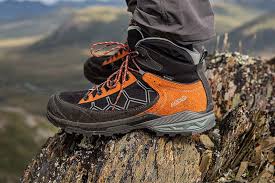
How to Choose the Right Hiking Boot
The wrong boot is the most common reason a great trail day turns into a bad one. Blisters, rolled ankles, and wet feet are almost always avoidable — with the right footwear for the terrain and conditions.
This guide walks you through the key decisions: cut, sole, waterproofing, and fit. By the end, you will know what to look for and what questions to ask at the gear shop.
Boot cut: low, mid, or high
Cut determines ankle support. The right choice depends on the terrain and how much weight you carry.
- Low cut — light, fast, good for smooth trails and day hikes with a light pack.
- Mid cut — the most versatile option. Moderate ankle support for varied terrain.
- High cut — maximum support for off-trail travel, heavy packs, or rocky terrain.
For most Summit Trail Outfitters tours, a mid-cut boot is the best starting point.
Sole stiffness and traction
A stiffer sole reduces foot fatigue on rocky terrain. A more flexible sole is comfortable on packed dirt and gravel. Lugged rubber soles (deep, chunky treads) provide grip on loose or wet surfaces.
If you hike primarily on maintained trails, a moderately stiff sole with medium lugs is sufficient. Save the aggressive tread for off-trail and technical terrain.
Breaking in your boots
New boots are built from stiff materials that need time to flex and conform to the shape of your foot. Wearing them straight out of the box on a long hike is one of the fastest ways to earn serious blisters.
Start with short walks around the neighborhood, then progress to a few shorter trail outings before committing to a full day.
Pay attention to any pressure points early — a small hot spot on mile two becomes a real problem by mile eight.
Waterproofing: when you need it
Waterproof membranes (often branded as Gore-Tex) keep feet dry in wet conditions — but they also reduce breathability. In hot weather, waterproof boots can make feet sweat more than they would in wet conditions without them.
In the Pacific Northwest, where trails are often wet through spring and early summer, waterproofing is usually worth it. In dry summer conditions, a non-waterproof boot with fast-drying materials may be more comfortable.
The most important factor: fit
A technically perfect boot in the wrong size or shape will cause problems. Always try boots on in person, at the end of the day when feet are slightly swollen, with the socks you plan to hike in.
Check for:
- Heel hold — your heel should not lift when you walk uphill
- Toe room — your toes should not press against the front when descending
- Width — no pinching on the sides or across the top of the foot